Where This Look Comes From
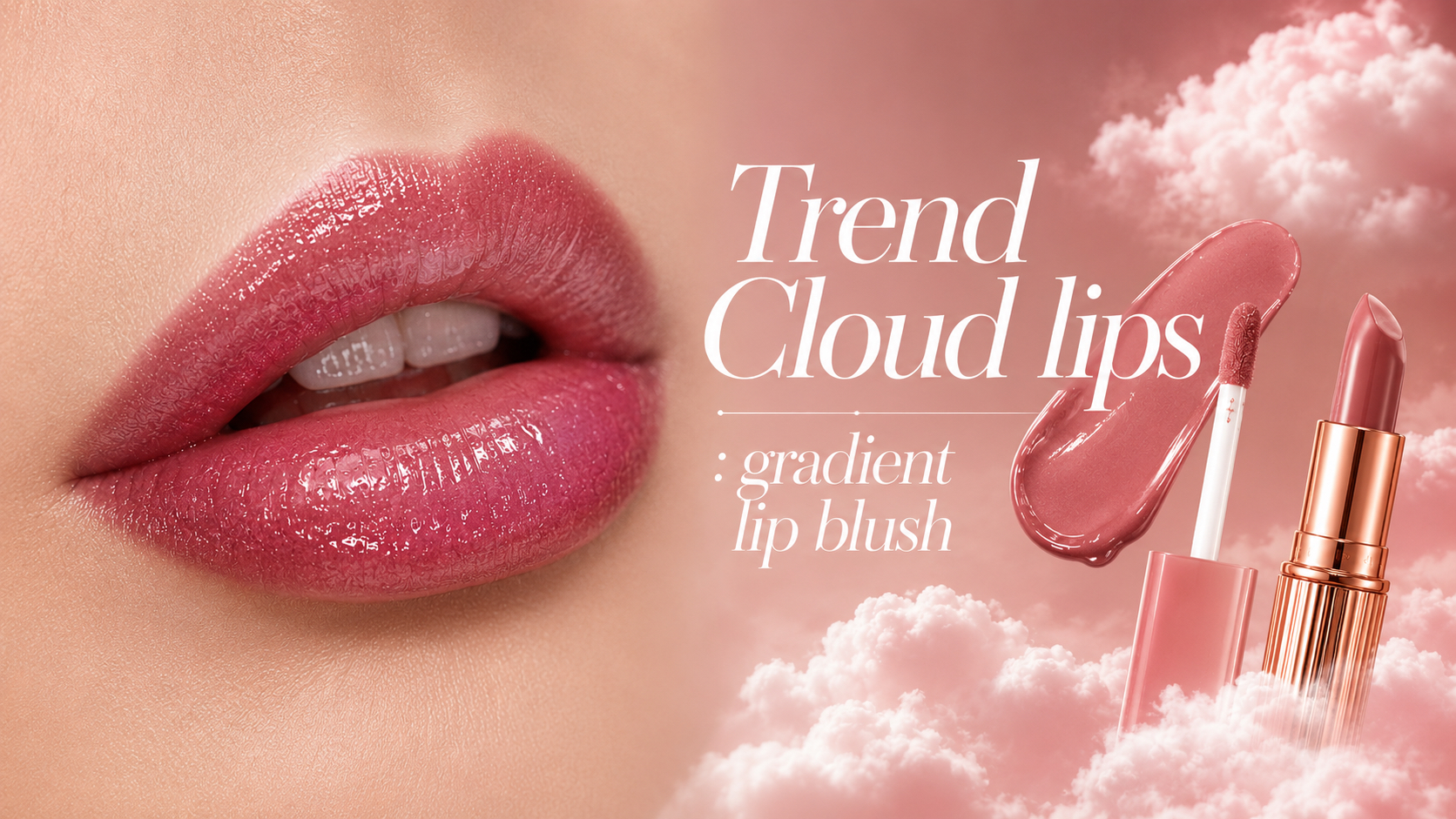
The look first gained traction across Asia, where the lip ideal has long leaned toward soft, youthful, and understated. You will recognise it from K-pop, K-drama, and the kind of barely-there lip tints that anchor most Asian beauty product lines. The reference point is consistent: a flush of colour at the centre, edges that dissolve into the skin, shades that sit close to the natural lip tone.
Western beauty has now caught up. The same look circulates under names like cloud lips, blurred lips, and the bitten lip, and Hollywood is leaning into it hard right now. Red carpets, magazine covers, and beauty editorials have shifted away from the heavily lined, matte-finished pout of recent years toward something softer, dewier, and more lived-in. The current direction is less defined, more diffused, and unmistakably this look.
The Reverse Gradient
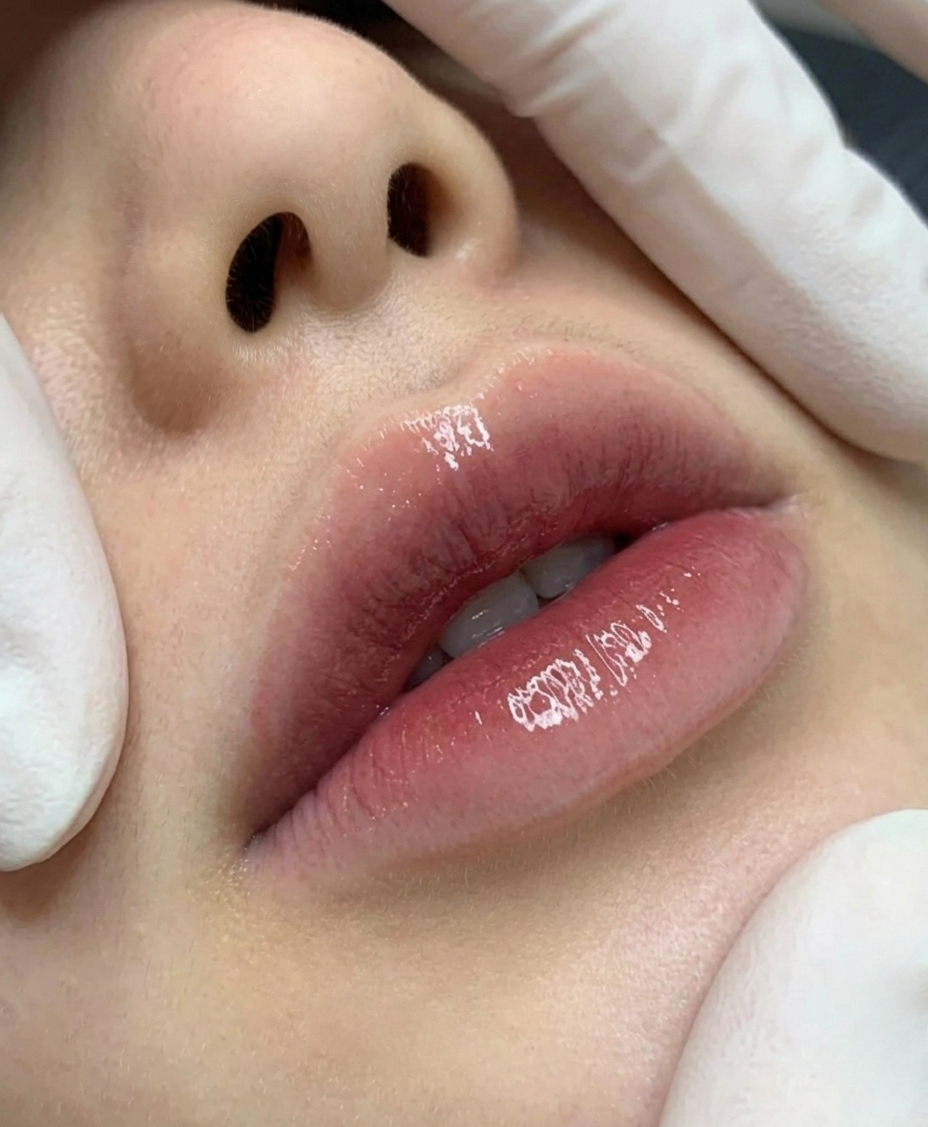
Where ombré lip blush concentrates pigment at the border, soft gradient lip blush does the opposite. Colour sits deepest at the centre and softens as it moves toward the outer edges, which are left blurred rather than defined. The effect reads as a lip tint worn down to the centre, or lips that are naturally flushed. It does not look like a procedure.
Soft Gradient
Deeper pigment in the centre, fading softly toward the border. Youthful, diffused, and natural-looking.
Ombré Style
Stronger pigment at the outer border, fading inward. More structured and sculpted.
Who It Suits
This style was made for clients who want their lips to look naturally full and youthful rather than made-up. If your instinct is to reach for a sheer tint over a defined liner, you are already describing this technique.
- Those who prefer a no-makeup look with visible colour
- Clients who find defined lip borders too heavy for their features
- Anyone whose lips have a reasonable shape but want a flush of colour
- Men's lip blush clients seeking a healthy, natural tone with no visible structure
- Anyone drawn to the cloud lips or blurred lips aesthetic in current beauty trends
It is also the style most likely to have people asking if you are wearing anything, rather than noticing a procedure. Because there is no defined edge, the result is genuinely subtle when the colour is kept in the lighter range.
The goal is lips that look like yours, but better rested, better coloured, more alive. Not lips that look done.
Colour for This Style
The soft gradient technique works with two distinct colour directions, and both are equally beautiful when settled. The decision comes down to whether you want a quiet, polished tone or something with a little more life to it.
Dusty pink, warm peach, muted rose, peachy nude, blush coral. These are the shades closest to the K-beauty original and the cloud lip references seen in current beauty content. They diffuse cleanly into the skin, photograph as polished without being loud, and pair effortlessly with any makeup look layered on top. Most clients drawn to a quiet, sophisticated finish choose from this palette.
Pink
Peach
Rose
Nude
Coral
Soft cherry, watermelon tint, warm rose, fresh berry, or a clean coral. Brighter shades work just as well with the soft gradient technique. The blurred edges keep the brightness from looking applied, and the colour reads as a natural flush rather than worn lipstick. A great option for clients who want their lips to look genuinely alive, including men's lip blush where the goal is healthy colour without ever looking made-up. Pigment heals softer than it appears on the day, so even the brightest shades settle into something wearable.
Cherry
Tint
Rose
Berry
Coral
Cool or warm undertones are both achievable. Cool tones brighten the face and complement pinker complexions. Warm tones add a healthy glow and suit golden or olive skin. Jessica selects and custom-mixes pigment based on natural lip colour, undertone, and the finished look you want.
Matte, Glossy, or Both
Lip blush heals as a soft satin tone, sitting somewhere between a true matte and a true gloss. From there, the day-to-day finish is yours to layer or leave alone. A clear gloss over the centre creates the glassy, plumped look that has dominated this year and turns the tattooed gradient into a textbook cloud lip. A nude or tinted lipstick adds extra colour without losing the underlying shape. Or wear nothing at all and let the soft gradient sit as it is.
Soft gradient with a layer of gloss on top is one of the most-requested looks in current beauty trends, and it is exactly what this technique sets you up for as a baseline.
The Blurred Border
The border is not left untouched. A very fine amount of pigment is placed just outside the natural lip line, then immediately worked outward with a diffusing technique that prevents any hard edge from forming. The lip appears to be its natural size or just fractionally larger, with colour that fades into skin rather than stopping against it.
Healing
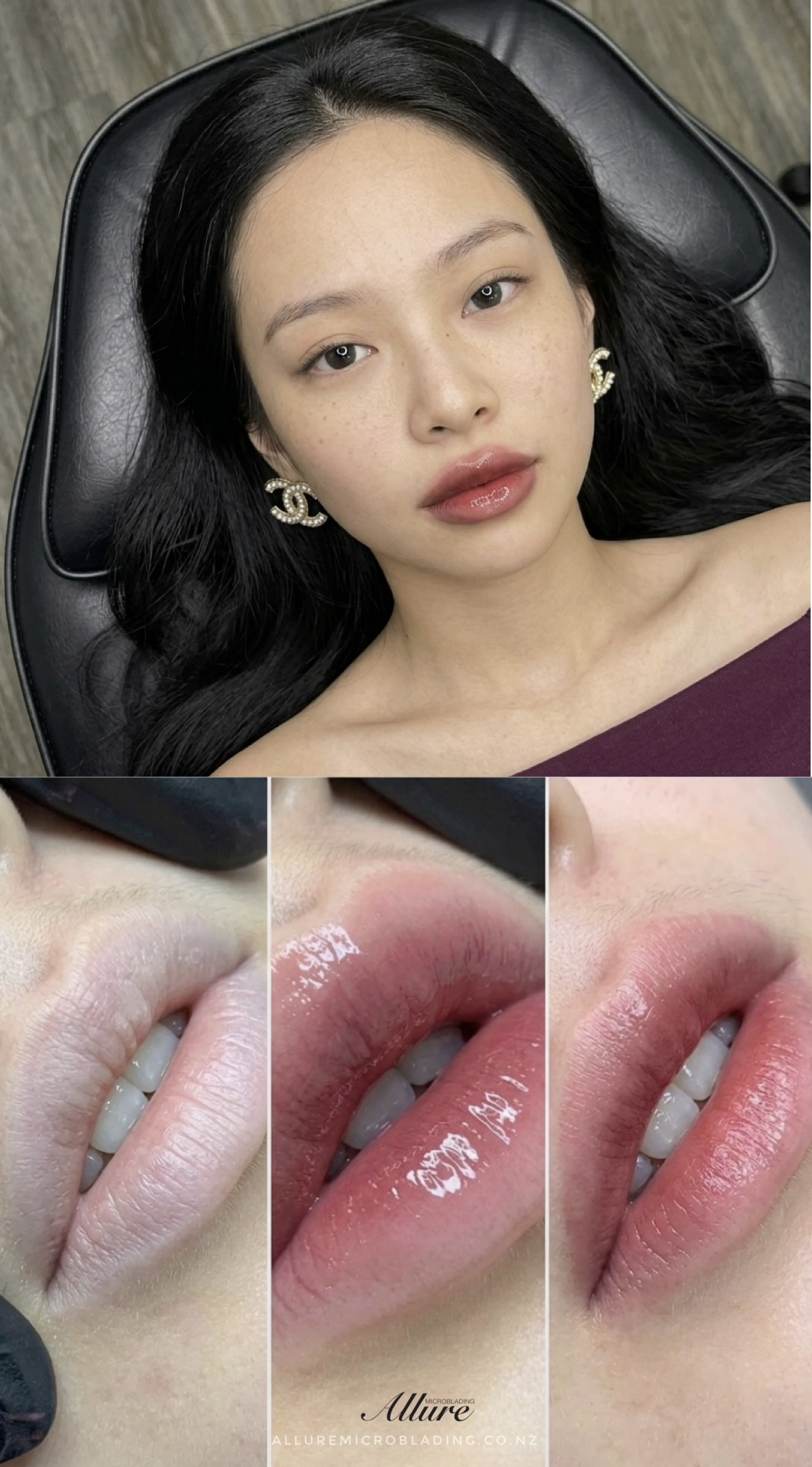
This style heals through the same stages as all lip blush tattoos. Because the technique uses less pigment concentration overall, the initial dark phase can be slightly less dramatic than ombré. The centre is where colour retains most visibly after healing, which is exactly the intention. Any areas that come up lighter than expected are corrected at the touch-up six to eight weeks later.
More of a Defined-Border Person?
If you want more structure and a sculpted edge, the ombré style may suit you better.
Pricing
Soft gradient lip blush is available as part of the Lip Blush service at Allure Microblading. The first session is $650, and the touch-up six to eight weeks later is $350. Style, colour, and gradient preference are discussed at the start of the appointment before anything is applied. The touch-up is booked separately within two months of the initial session.